Weather vs Climate – Understanding the difference between weather and climate
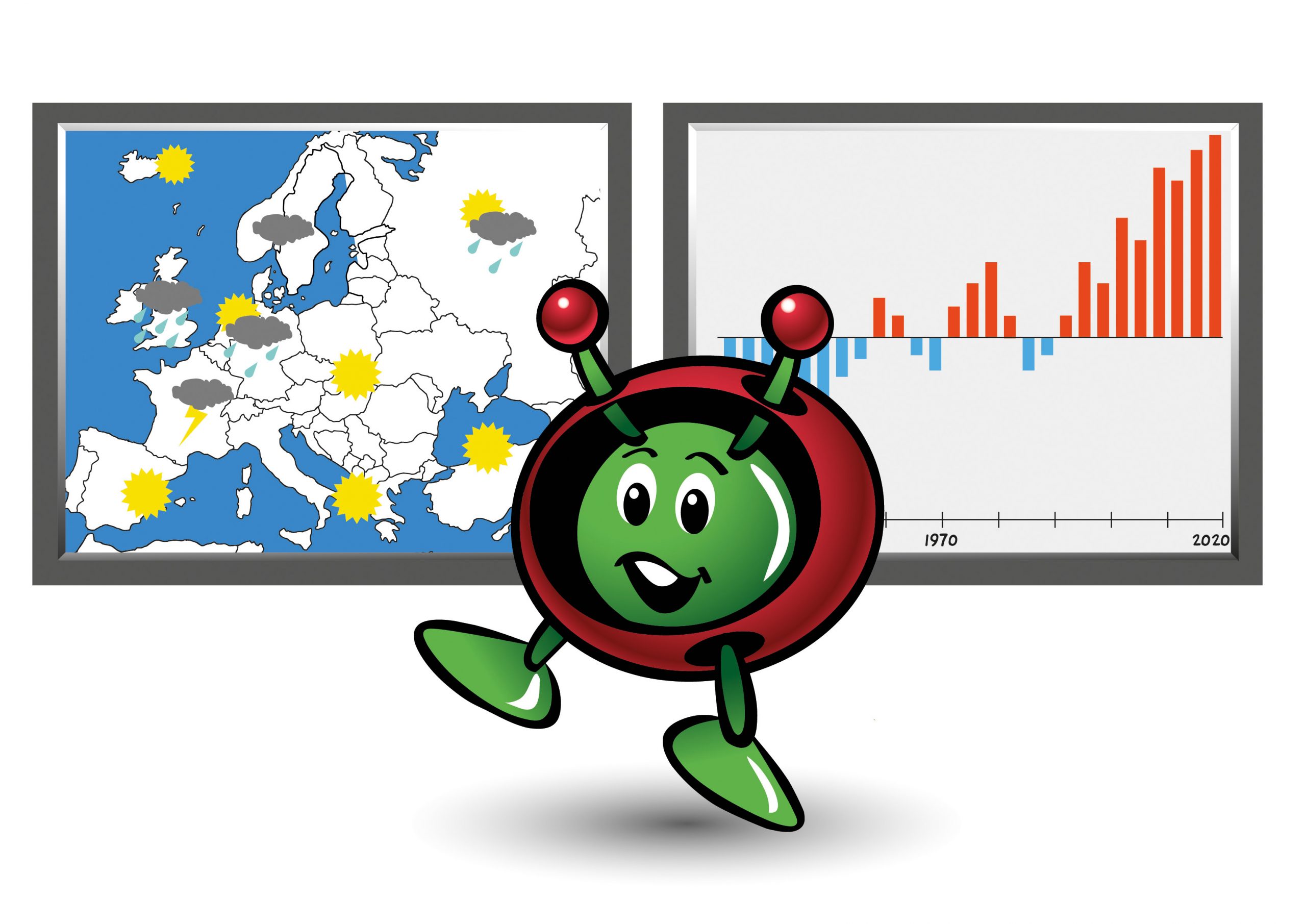
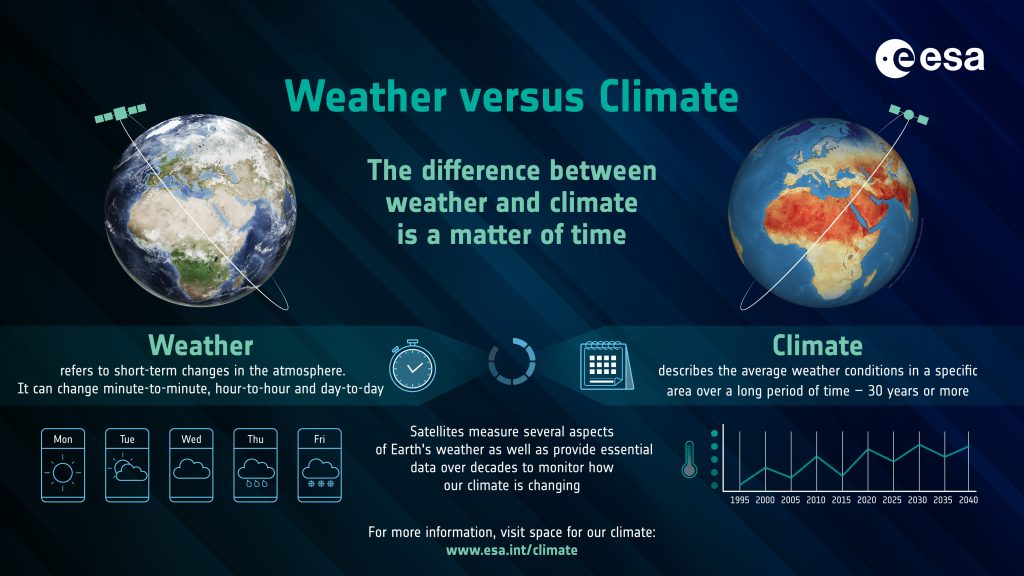
In this set of three activities, students will learn the difference between weather and climate. They will identify different climatic zones and collect their own weather data. They will analyse and compare daily and monthly air temperature measurements. Finally, they will learn about different climate scenarios and identify what it means for the monthly average temperatures in their area/country.
Subject Mathematics, Science
- Understand the difference between weather and climate
- Identify the elements and factors of climate (wind, temperature, atmospheric pressure, rainfall)
- Identify the world climatic zones by detecting some basic characteristics
- Compare weather and climate data
- Learn how to take and collect weather measurements
- Calculate the average weekly/monthly air temperature
- Interpret tables and graphs, and drawing conclusions
- Thermometer
- Pupil activity sheet
- Calculator
Did you know?
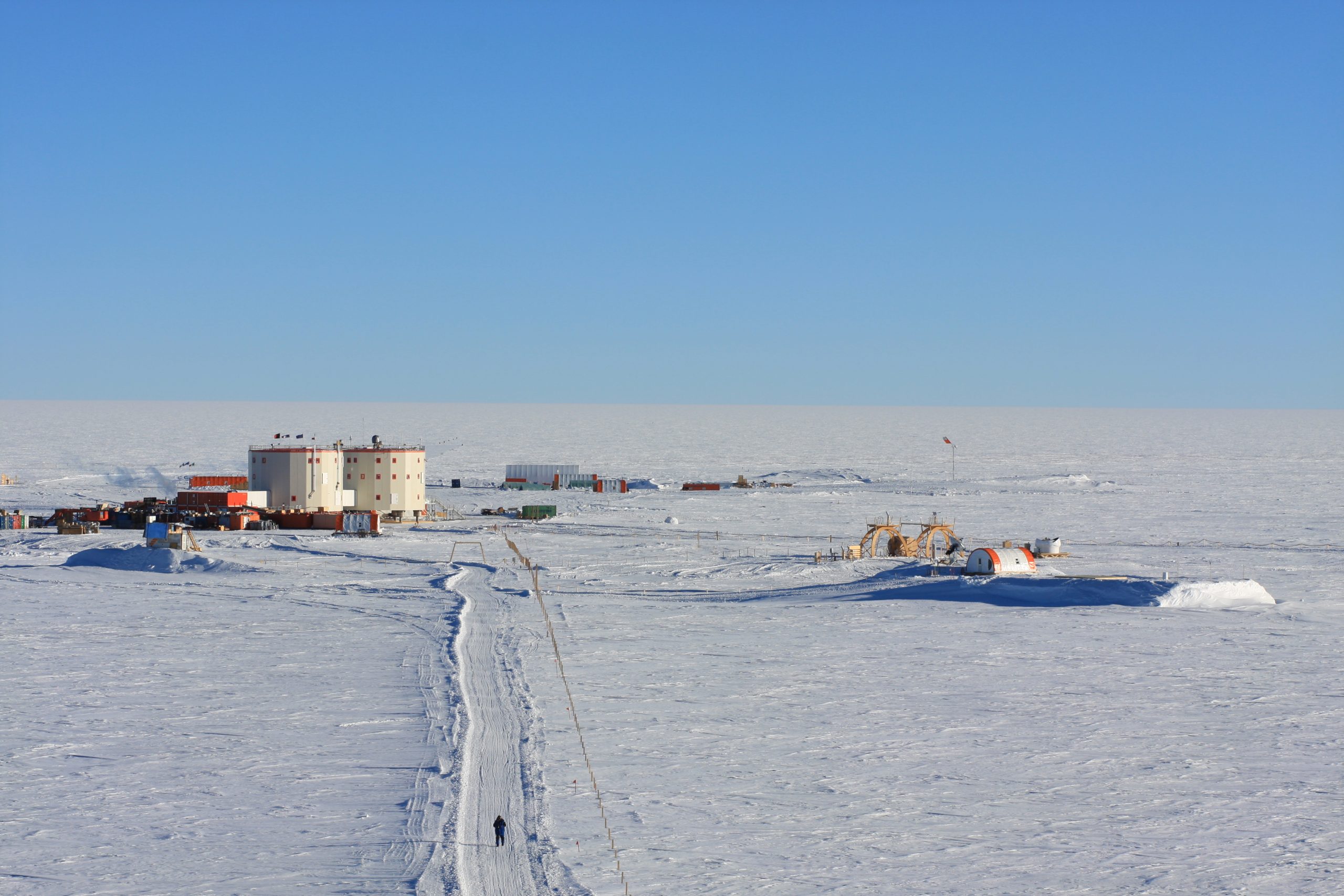
The climate has been changing for billions of years. Long periods of colder or warmer climate occurred long before humans were on the planet to influence it. Scientists work like detectives to figure out what the climate used to be like. These scientists are called paleoclimatologists. They use clues found in the sediments of lakes and oceans, in glaciers, in fossils, and as rings inside trees to study Earth’s climate. Concordia research station in cold and dry Antarctica is one of the most isolated human outposts on Earth and a perfect place to investigate our planet’s climate past. When paleoclimatologists combine their reconstructed history of Earth’s climate with observations of Earth’s modern climate and put them into computer models, they can predict future climate change.

Copernicus Browser Case Study: Algal Blooms From Space
Brief description This activity supports teachers in guiding their students to investigate algal blooms and their impacts using satellite imagery....
The greenhouse effect and its consequences – Investigating global warming
Brief description In this set of three activities, students will do hands-on experiments and learn how to interpret satellite images...
Copernicus Browser Case Study: Oil Spills From Space
Brief description This activity supports teachers in guiding their students to investigate oil spills and their impacts using satellite imagery....
The Magic of Light – Using spectroscopes and colour wheels to study the properties of light
Brief description In this set of eight activities, pupils work individually or in groups to build a spectroscope that can...