Copernicus Browser Case Study: Algal Blooms From Space
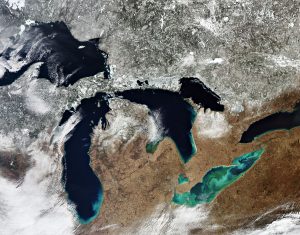
This activity supports teachers in guiding their students to investigate algal blooms and their impacts using satellite imagery. It includes exercises for data collection and analysis, which can be adapted to the specific focus chosen by the teacher and students. By using satellite data from the Copernicus Sentinel-2 mission, students will examine the factors contributing to algal bloom formation, learn to detect and analyse these phenomena and reflect on their impacts on ecosystems and society. Note! This activity is designed to complement the Copernicus Browser Teacher Guide, which provides more details about the tool and its features.Â
Subject Biology, Geography, Physics, Environmental Sciences
- Define algal blooms and identify their potential causes and effects on ecosystems and society.
- Describe the benefits of using satellite imagery from the Copernicus Sentinel-2 mission to detect and monitor algal blooms, including its ability to provide large-scale, frequent, and detailed observation.
- Use the Copernicus Browser to locate, analyse, and interpret satellite data related to algal blooms.
- Investigate patterns in algal bloom development over time and examine the relationships between environmental factors and bloom intensity.
- Assess the strengths and limitations of satellite data compared to ground-based observations for monitoring algal blooms.
Did you know?
Cyanobacteria are bacteria that obtain energy via photosynthesis. They absorb light using phycobilin pigments (photosynthetic pigments), which give them their unique blue-green colour, to convert carbon dioxide and water into oxygen and glucose. Cyanobacteria converted the early Earth’s oxygen-poor atmosphere to the oxygen-rich atmosphere of today. The name cyanobacteria refer to their colour (from Ancient Greek κυανός (kuanós) meaning ‘blue’), giving them their other name, “blue-green algae”. Cyanobacteria can be seen and monitored by satellites from space.
From the Ground and from the Sky- Analysing and understanding images of planet Earth taken from space
Brief description In this set of three activities, pupils are introduced to the idea of remote observation of the Earth...
Copernicus Browser Case Study: Oil Spills From Space
Brief description This activity supports teachers in guiding their students to investigate oil spills and their impacts using satellite imagery....
Weather vs Climate – Understanding the difference between weather and climate
Brief description In this set of three activities, students will learn the difference between weather and climate. They will identify...
Sea ice from space – Investigating Arctic sea ice and its connection to climate
Brief description In this set of three activities, students will investigate Arctic sea ice. First, they will perform a hands-on...
Copernicus Browser Case Study: Algal Blooms From Space
Brief description This activity supports teachers in guiding their students to investigate algal blooms and their impacts using satellite imagery....
Paxi explores ice
Brief description:Join Paxi on an adventure to the North and South poles, to learn more about ice and its role...